
AI & Building
Vibe Coding Is Fast—But Shipping a Real Product Is Different
Vibe coding makes it easier to start, but turning generated code into a secure, maintainable and production-ready product still requires structure, judgment and verification.
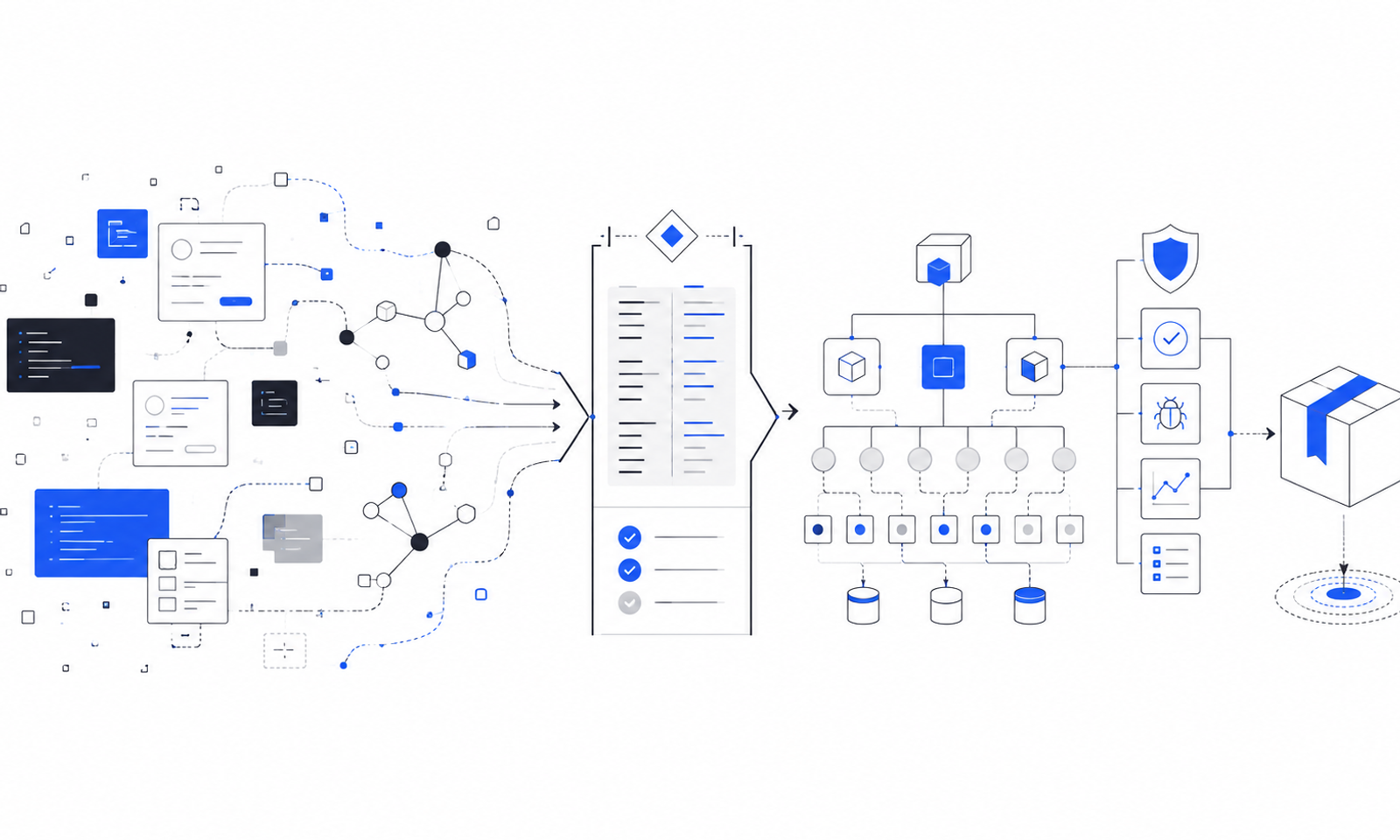
Vibe Coding Is Fast—But Shipping a Real Product Is Different
Vibe coding changed the cost of starting.
I can describe an interface, ask an AI coding agent to build it, and see a working version much faster than I could when every component began with an empty file. That is genuinely useful. It reduces the distance between an idea and something I can inspect.
But a working screen is not the same as a working product.
A prototype needs to prove an idea. A production product has to keep working after the exciting first session: on another device, with real content, under a real domain, within the limits of its hosting platform, and after somebody changes the code six months later.
The difference is not whether AI wrote the code. The difference is whether anyone took responsibility for the result.
What “vibe coding” is good at
I use the phrase for a fast, conversational way of building: describe what I want, inspect what appears, react to it and continue. The process is visual and iterative. I do not need to specify every implementation detail before I see the first version.
This is especially effective for:
- exploring an interface direction;
- scaffolding a route or component;
- turning a rough workflow into something clickable;
- comparing two technical approaches;
- creating temporary tools and scripts;
- finding my way through an unfamiliar codebase; and
- learning a framework by building with it.
The feedback loop is much shorter. I can reject a weak direction before investing heavily in it. I can ask questions against real code instead of abstract documentation. I can spend more time on the product decision and less time typing familiar scaffolding.
Those are meaningful advantages. The mistake is assuming they remove the later stages.
Why the first working version is deceptive
A generated feature often looks complete because the visible path works. The hidden questions arrive later.
Where does the data live? What happens when it is empty? Is the dependency compatible with the actual framework version? Does the page still work after a static export? Are secrets leaking into browser code? Is an image domain configured? Can a draft become public accidentally? What happens when a slug changes? How does a failed request appear to a visitor?
None of these questions make the first demo less valuable. They reveal what the demo was: a hypothesis, not proof.
Context drift
An agent can solve the problem described in the latest prompt while slowly moving away from the architecture of the repository. It might create a second utility for something that already exists, add a new component style, or replace a deliberate convention with a familiar default.
The larger the codebase, the more expensive that drift becomes.
Plausible code is not verified code
Generated code can look correct while using an outdated API, misunderstanding a type, ignoring an edge case or relying on behavior that changes between development and production.
Syntax is only the first threshold. A production change needs evidence: lint, type checking, tests when applicable, a clean build, and an inspection of the final behavior.
Deployment changes the problem
Local development is generous. A production host has opinions.
My own website is a useful example. The Sanity integration can query live content during development, and a server platform could refresh pages on a schedule. GitHub Pages, however, only serves static files. It cannot run a Next.js server or perform incremental regeneration after a request.
That means the content architecture must respect the host. Published Sanity documents are fetched during a build, exported as static pages, and deployed to GitHub Pages. A new article does not appear merely because I pressed Publish in Studio; a new build must run.
The feature did not become “bad.” The deployment constraint changed the correct implementation.
Security and permissions are product decisions
An AI agent can add authentication, an upload endpoint or an environment variable. It cannot decide how much risk the business should accept unless I give it that context.
I need to know which data is public, which actions mutate data, where tokens are allowed, what the minimum permissions are, and which operations require human approval. Security cannot be a final prompt that says “make it secure.” It has to shape the architecture.
Maintenance begins at launch
Every dependency, schema field and abstraction becomes something the project owns.
Sometimes the fastest generated solution adds more machinery than the problem deserves. Sometimes it duplicates an existing pattern because the agent was not shown the relevant file. Sometimes a clever abstraction makes a simple future edit harder.
Production quality is not maximum complexity. It is the smallest understandable system that meets the real requirements.
What this website’s CMS taught me
Adding a writing section sounds simple: create an article schema, fetch posts and render them.
The real task included much more:
- keeping Sanity Studio standalone from the public Next.js app;
- defining categories, SEO fields and reusable article blocks;
- rendering Portable Text safely;
- handling empty, loading, error and not-found states;
- calculating reading time;
- generating article metadata and structured data;
- including only published, indexable pages in the sitemap;
- configuring Sanity images without breaking existing sources;
- checking the actual repository instead of trusting an old framework assumption;
- building both applications independently; and
- adapting the content refresh strategy to GitHub Pages.
The agent accelerated a large amount of implementation. The production value came from inspecting the repository, naming the constraints, verifying the builds and documenting the remaining manual steps.
One small detail captures the difference: an earlier plan referred to Next.js 15, but the repository was already on Next.js 16.3.1. A prototype might ignore that mismatch until something breaks. Production work begins by checking.
The workflow I now prefer
1. Use AI to reduce uncertainty first
Before asking for code, I ask the agent to inspect the relevant routes, configuration, dependencies and existing conventions. I want a short explanation of what it found and which assumptions still need confirmation.
This is where an agent is more valuable than autocomplete: it can connect information across the repository.
2. Define the acceptance boundary
“Build a blog” is not a testable finish line.
A useful boundary sounds more like this: published posts appear on /writing; each slug has metadata and structured data; drafts are excluded; empty and invalid states are designed; the static export succeeds; and the Studio still builds separately.
Once “done” is observable, the agent can work toward evidence instead of appearance.
3. Make focused changes
Large one-shot rewrites are hard to review. I prefer changes that preserve the existing design system and reuse the current utilities. New dependencies should have a clear reason. Unrelated code should remain untouched.
If the task reveals a larger architectural problem, that deserves a separate decision—not a surprise refactor hidden inside the feature.
4. Verify in layers
My default verification sequence is:
- inspect the changed files and generated diff;
- run lint;
- run TypeScript checking;
- run relevant tests;
- produce a full production build or static export;
- smoke-test the important routes and states; and
- document warnings instead of disguising them as success.
Each layer catches a different class of mistake. A passing build does not prove the content is good. A good-looking page does not prove the types or deployment are correct.
5. Keep a human release gate
I want the agent to prepare a deployable result, but deployment is a separate action. Before I publish, I review the content, environment variables, changed files, host configuration and domain behavior.
That pause is not a rejection of automation. It is a point of ownership.
A simple rule: explore with speed, ship with evidence
I do not see vibe coding and engineering as opposing camps.
Vibe coding is a useful mode for discovery. Engineering is the discipline that turns the discovery into a system other people can depend on. The same person can move between both modes during one project.
I want the early loop to be playful: try the idea, see the interface, learn what I actually mean. Then I want the release loop to become explicit: understand the environment, constrain the change, test the behavior and review the result.
The better AI tools become, the more code they will produce. That makes judgment, context and verification more valuable—not less.
The goal is not to prove that I can type every line manually. The goal is to understand what I am shipping well enough to stand behind it.
Building a product or business website? Kraftt Digital helps turn ideas into focused, maintainable digital experiences—without treating the first generated version as the final product. Explore Kraftt Digital (https://krafttdigital.com/).
Sources and further reading
- Next.js: Static exports (https://nextjs.org/docs/app/guides/static-exports)
- Next.js: Incremental Static Regeneration (https://nextjs.org/docs/app/guides/incremental-static-regeneration)
- GitHub Docs: What is GitHub Pages? (https://docs.github.com/en/pages/getting-started-with-github-pages/what-is-github-pages)
- OpenAI: Codex best practices (https://learn.chatgpt.com/guides/best-practices)